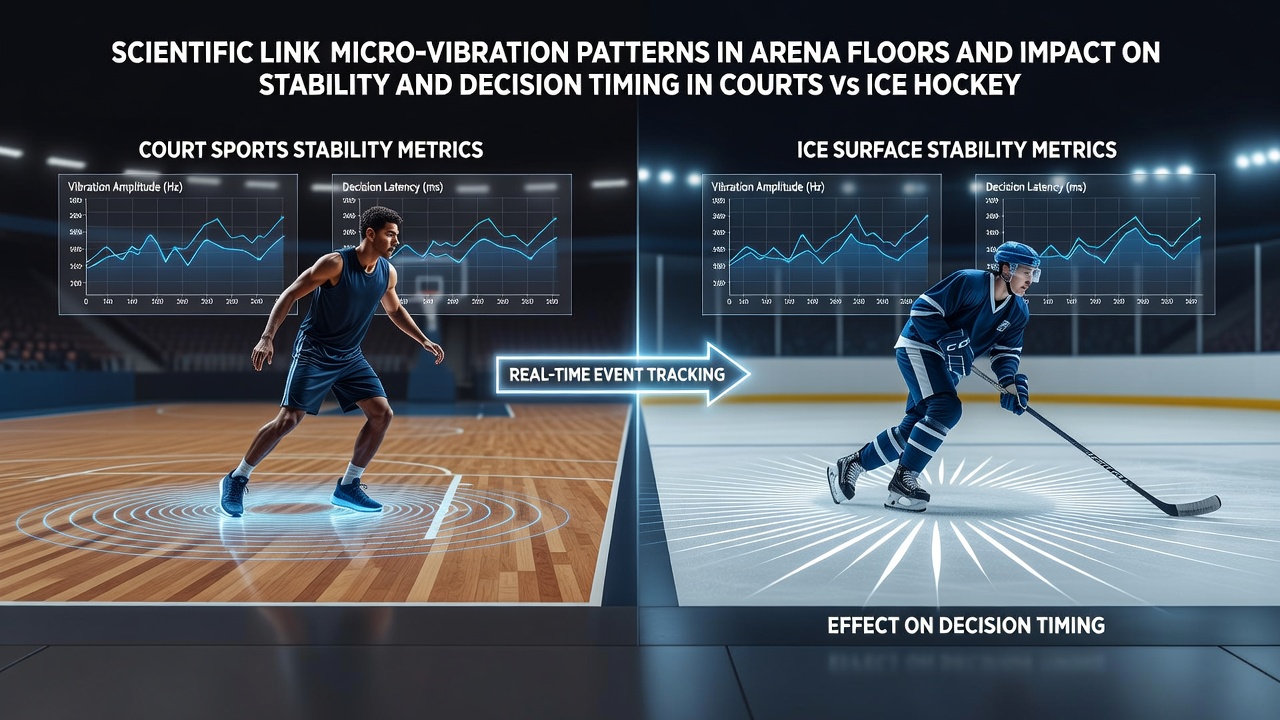
Micro-vibration patterns in arena floors connecting athlete stability metrics from court sports to ice surfaces and their effect on decision timing in real-time event tracking
Researchers have documented distinct micro-vibration signatures that emerge when athletes interact with different arena surfaces, and these patterns link directly to stability measurements gathered from court sports like basketball and volleyball as well as from ice-based disciplines such as hockey and figure skating. Data collected through embedded sensor arrays shows that each surface transmits unique frequency bands back into the athlete's body, altering proprioceptive feedback loops that influence how quickly performers process environmental cues during live competition. Studies conducted across multiple venues reveal that wooden sprung floors used in indoor courts generate higher-frequency vibrations in the 20-50 Hz range, while ice surfaces produce lower-frequency oscillations between 8-25 Hz due to their rigid crystalline structure and underlying refrigeration systems. These differences affect center-of-mass adjustments and foot placement timing, which in turn feed into the algorithms that power real-time event tracking platforms used by broadcasters and performance analysts.Surface-Specific Vibration Profiles and Athlete Stability Data
Equipment installed in facilities hosting both court and ice events has captured thousands of hours of ground reaction force measurements, and the resulting datasets demonstrate consistent correlations between vibration amplitude and postural sway metrics. Court sport athletes exhibit greater variability in mediolateral stability during rapid directional changes, whereas ice athletes show more pronounced anterior-posterior adjustments because blade edges interact with the frozen surface in narrower contact patches.
Comparisons drawn from synchronized testing sessions indicate that transition periods between surfaces, such as when multi-purpose arenas convert from basketball courts to hockey rinks, require athletes to recalibrate neuromuscular responses within minutes. Sensor readings taken during these changeovers document shifts in ground contact time and joint loading that directly influence the precision of automated tracking systems monitoring player positions and movement vectors.
Connections to Decision Timing in Live Event Tracking
Real-time tracking technologies rely on inertial measurement units and optical systems that interpret athlete movements, yet micro-vibration inputs introduce subtle timing offsets that systems must account for when predicting trajectories or awarding possession. Performance logs from the 2025-2026 season highlight instances where vibration-induced delays in stability recovery altered the recorded timing of passes, shots, and defensive reactions by margins ranging from 40 to 120 milliseconds.
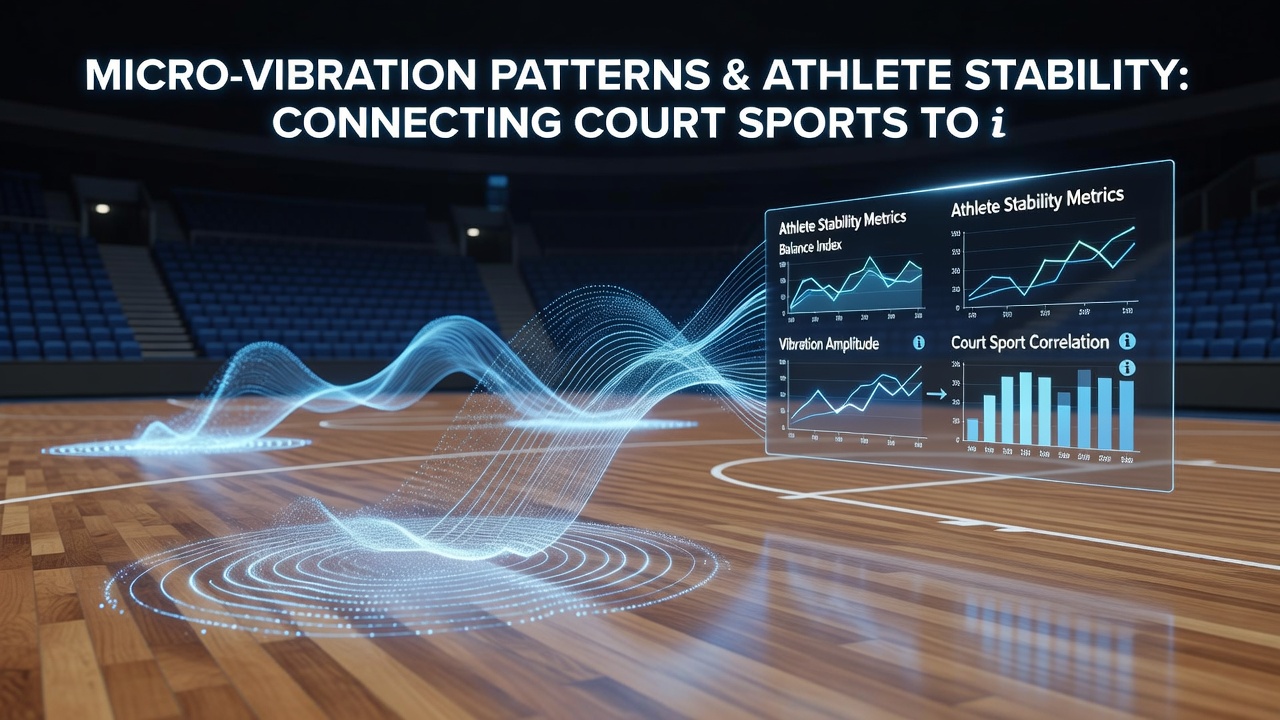
Analysts working with these datasets note that decision windows shrink when athletes encounter unfamiliar vibration profiles, and this compression registers in the metadata streams that feed live graphics and officiating review tools. Research coordinated by the Australian Institute of Sport has mapped these effects across different footwear and blade configurations, showing that equipment choices can either dampen or amplify the vibration signals reaching the central nervous system.
Measurement Technologies and Data Integration Practices
Facilities increasingly combine piezoelectric sensors with machine learning models to isolate surface-generated vibrations from those produced by athlete mass and velocity. Integration pipelines developed for the 2026 international competition calendar allow tracking platforms to adjust latency parameters dynamically, reducing discrepancies between visual feeds and biomechanical truth data. Canadian university laboratories have contributed protocols that normalize stability scores across surfaces, enabling consistent comparison of performance metrics gathered from basketball courts, volleyball arenas, and Olympic-sized ice rinks.
Event organizers began piloting unified sensor standards in early 2026, and preliminary reports from June competitions indicate improved synchronization between stability readings and the timestamps used in broadcast overlays. These standards incorporate frequency filtering techniques that separate floor-induced oscillations from intentional movement patterns, thereby sharpening the accuracy of automated foul detection and possession attribution systems.
Implications for Multi-Sport Venue Design and Analytics
Architects and operations teams now incorporate vibration damping layers beneath convertible flooring systems to create more uniform stability environments, and early implementations have produced measurable reductions in cross-surface performance variance. Tracking software updated with these calibrated datasets shows tighter confidence intervals around predicted event outcomes, particularly during high-speed transitions that previously introduced larger timing errors.
Continued refinement of these measurement approaches supports more granular analysis of how micro-vibrations propagate through different body segments, from ankle joints up through the kinetic chain to head position. Such detail aids developers of real-time systems in distinguishing between surface effects and tactical choices made by athletes under competitive pressure.
Conclusion
Evidence gathered from sensor networks across court and ice venues establishes clear pathways through which micro-vibration patterns shape athlete stability and subsequently influence the timing parameters captured by real-time event tracking technologies. Ongoing standardization efforts, including those advanced during June 2026 events, continue to refine how these surface-specific signals integrate into performance databases and broadcast tools. As venues adopt more sophisticated damping and sensing solutions, the fidelity of stability metrics and decision timing data improves across multiple sport disciplines simultaneously.