How Surface Textures Influence Movement Efficiency in Professional Athletic Events
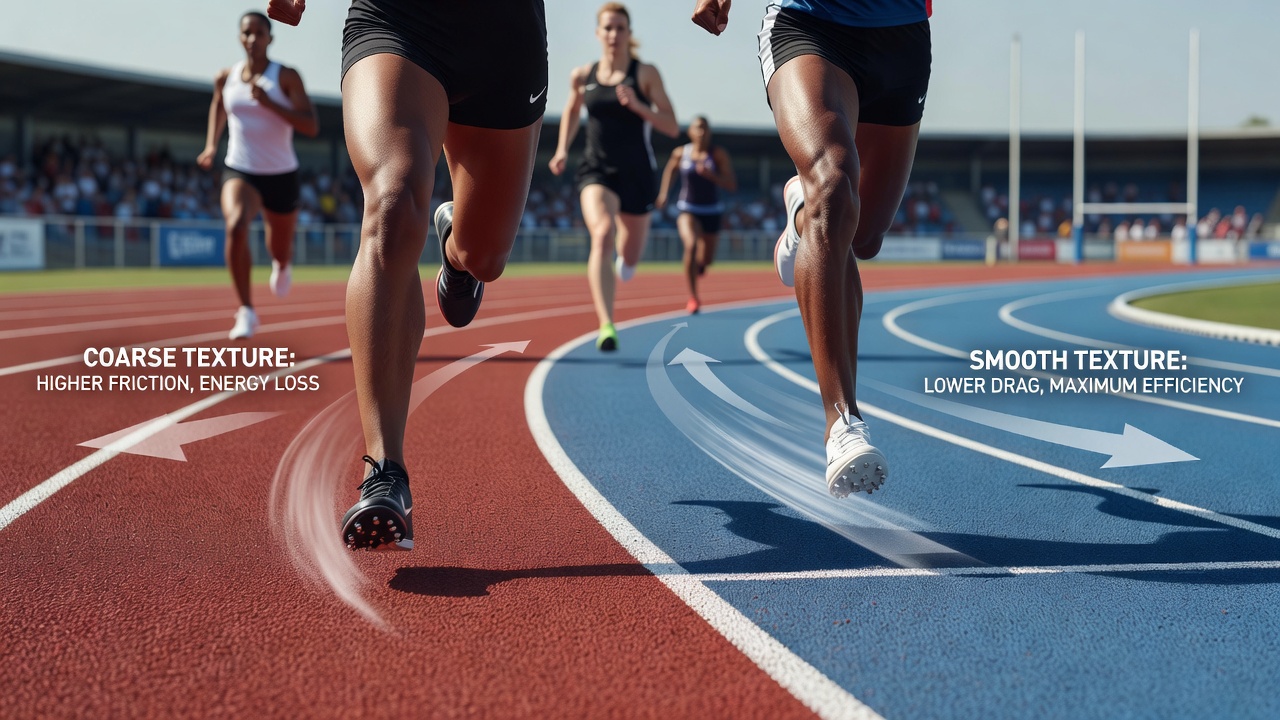
Surface textures play a direct role in determining how efficiently athletes move across competitive environments, and researchers continue to measure these effects through controlled studies of friction coefficients along with energy return rates. Professional events in track and field along with court-based sports demonstrate measurable differences when athletes transition between surfaces that vary in hardness, porosity, and micro-level patterns, while data collected during major competitions shows consistent correlations between texture properties and stride mechanics.Friction and Grip Dynamics Across Common Athletic Surfaces
Track and field venues typically feature synthetic polyurethane layers embedded with rubber granules, and these materials create specific friction profiles that affect starting block push-off along with curve running stability. Studies from the University of Oregon's Human Performance Laboratory indicate that higher-granule surfaces increase horizontal force application by measurable margins during the first 10 meters of sprint events, whereas smoother overlays reduce slippage yet limit the propulsive feedback athletes rely on for acceleration. Court sports introduce additional variables since basketball hardwood floors receive specialized sealants that alter surface grip compared to poured rubber or modular tile systems used in indoor facilities.
Tennis courts present another clear example where clay, grass, and hard-court textures produce distinct movement demands, and biomechanical analyses reveal that sliding friction on clay allows longer braking distances before directional changes while grass demands quicker foot placement adjustments to maintain balance. Professional players adapt their step patterns accordingly, and timing data from ATP events shows measurable differences in split-second recovery times between these surfaces.
Energy Return and Force Absorption in Team Sports
Artificial turf systems in soccer and American football incorporate infill materials that interact with cleat designs to manage both traction and shock absorption, and engineering reports document how varying infill depths influence ground reaction forces during cutting maneuvers. When athletes plant and redirect, surfaces with higher energy restitution return a greater portion of impact energy into forward propulsion, which can influence repeated sprint capacity over full match durations. Natural grass fields, by contrast, compress differently under load and often dissipate more energy through deformation, requiring athletes to generate additional muscular force to maintain equivalent speeds.
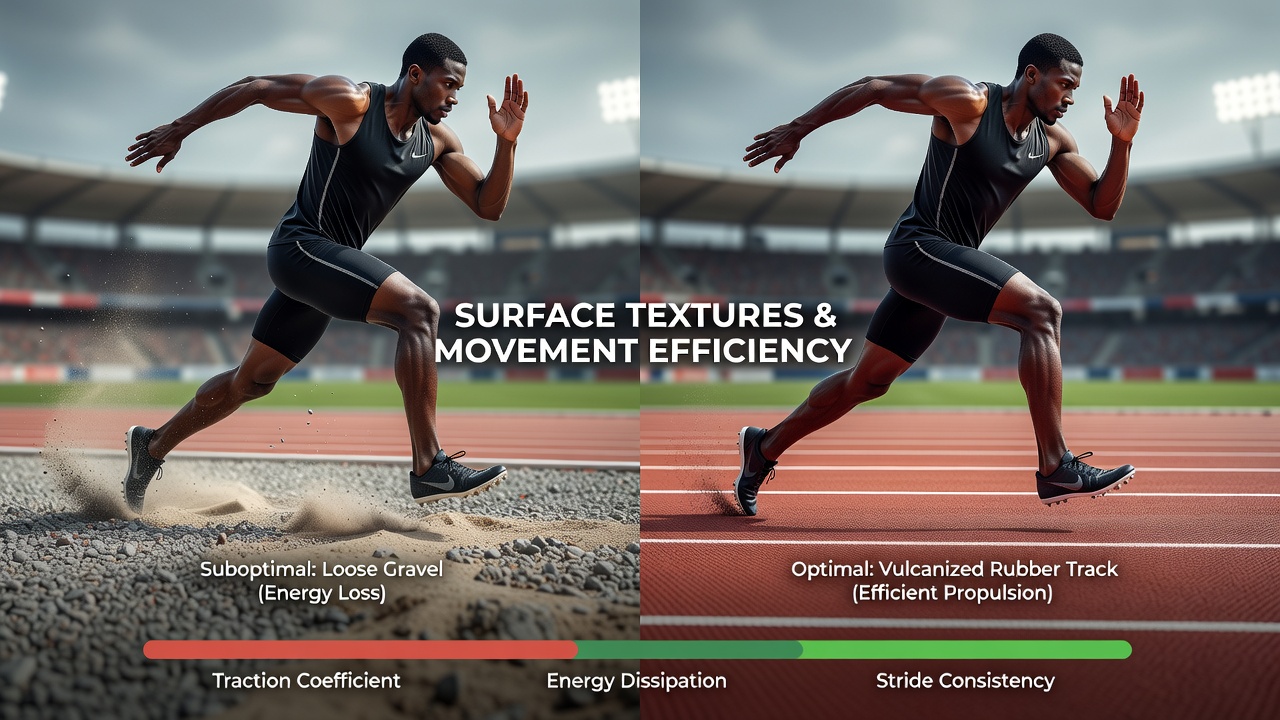
Researchers at the Australian Institute of Sport have examined these interactions across multiple elite programs, and their findings link specific turf constructions to reductions in metabolic cost during prolonged high-intensity efforts. The same principles extend to hockey and lacrosse where synthetic turf textures influence stickhandling stability along with rapid directional shifts, and players report that consistent surface response allows more predictable force application throughout extended playing periods.
Measurement Techniques and Performance Data
Modern analysis relies on force plates, high-speed motion capture, and wearable sensors that record ground reaction forces at frequencies exceeding 1000 hertz, enabling precise mapping of how texture variations alter contact time and impulse vectors. Professional leagues have incorporated these tools into routine monitoring, and aggregated datasets from events held through 2025 reveal that athletes achieve higher peak velocities on surfaces optimized for their sport-specific movement patterns. Equipment manufacturers adjust footwear constructions in response, pairing outsole geometries with known surface characteristics to maximize efficiency without compromising stability.
International governing bodies continue to establish texture standards that balance performance consistency with safety considerations, and certification protocols now require documentation of friction ranges along with shock absorption metrics before venues receive approval for elite competition. These standards help minimize variability between venues while allowing surface innovations that address specific climatic or usage demands.
Conclusion
Texture characteristics remain a foundational factor in athletic movement efficiency, and ongoing research continues to refine understanding of how micro-level surface properties interact with athlete biomechanics across diverse events. Data collected from professional competitions provides objective benchmarks that inform both facility design and equipment development, while athletes themselves adapt technique based on the predictable responses of different textures. As measurement technologies advance further, the connections between surface engineering and performance outcomes become increasingly quantifiable across global sporting calendars.